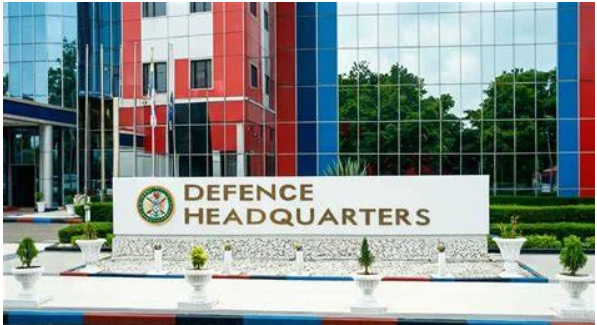
The Defence Headquarters (DHQ) has extended its surrender programme to armed groups operating in the South-East, urging fighters to lay down their weapons and embrace peace.
The offer, which was previously available to terrorists and bandits in the North-East, North-West and North-Central regions, will now cover armed groups in the South-East, South-South and South-West.
Director of Defence Media Operations, Major General Michael Onoja, disclosed this while speaking with journalists in Abuja.
His comments followed the recent surrender of some militants to troops of Operation Udo Ka in the South-East.
According to Onoja, any fighter willing to surrender will be treated in line with international law and handed over to the appropriate authorities for further action.
“They are welcome to surrender. The Armed Forces will receive them in line with international conventions and due process,” he said.
He stressed that there is no deadline attached to the offer.
“They can surrender at any time. However, military operations against criminal groups will continue and are being intensified,” he added.
The announcement comes just days after the Nigerian Army reported that sustained military operations under Operation Udo Ka had forced members of a militant group to voluntarily surrender.
Troops later recovered an AK-47 rifle, magazines, ammunition and several locally made firearms after one suspect led them to a hidden armoury.
In another intelligence-led operation, security forces recovered two General Purpose Machine Guns, dozens of rounds of ammunition and an improvised explosive device.
Military authorities described the surrenders as evidence that ongoing operations are weakening criminal networks and encouraging fighters to abandon violence.
The South-East has experienced years of insecurity, including attacks on security personnel, government facilities and civilians.
Operation Udo Ka was launched to dismantle armed groups and restore peace across the region.
The latest announcement signals that the military is now extending its surrender-and-rehabilitation approach beyond the northern regions to other parts of the country facing security challenges.