Air travel could become less stressful for Nigerians living with disabilities as the Federal Airports Authority of Nigeria (FAAN) and disability advocates step up efforts to remove barriers at the country’s airports.
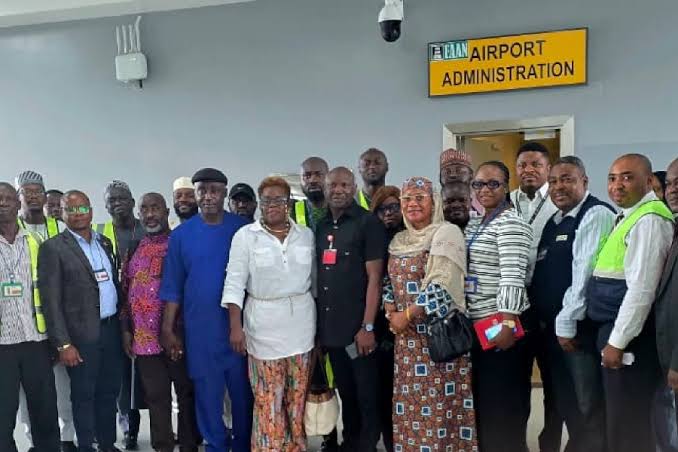
The commitment was renewed at a stakeholders’ meeting between Project Elevate: National Aviation Accessibility Initiative and FAAN officials at the International Wing of Nnamdi Azikiwe International Airport, Abuja.
The meeting reviewed concerns raised during an earlier accessibility assessment and examined practical ways to improve services for Persons with Disabilities (PWDs) and Persons with Reduced Mobility (PRMs).
Leading the Project Elevate delegation, Comrade Abiodun Ozurumba, praised FAAN for engaging disability advocates but said several problems still needed urgent attention.
These include poor support from some ground handlers, faulty lifts in some terminals, steep ramps that are difficult for people with mobility challenges to use and limited communication support for Deaf passengers.
For Dr Adebukola Adebayo, a World Bank accessibility consultant and member of the blind community, the problem is more than just infrastructure.
He recalled being left under an aircraft for almost 30 minutes despite being a priority passenger.
Adebayo also criticised what he described as discriminatory treatment by some airlines, saying he is sometimes told he must travel with an aide even though he can travel independently, including on international flights.
He called on FAAN to work with disability advocates to produce an accessibility handbook explaining the rights of passengers with disabilities, available airport support services and how travellers can access them.
He also proposed official disability identification cards through the National Commission for Persons with Disabilities (NCPWD) to prevent impersonation and ensure assistance reaches those who genuinely need it.
For Deaf travellers, the challenge is often communication.
Architect Ismail Muhammed, who represented the Deaf community, said passengers have missed flights because important announcements are made only through public address systems.
He called for airports to introduce visual information systems and sign language interpreters alongside audio announcements.
Ground handling companies said some improvements are already being made.
Oladimeji Sheriff of Precision Aviation Handling Company Limited (PAHCOL) said the company now provides designated drop-off points, trolley services, faster Customs and Immigration processing, automated entrance doors and cabin wheelchairs that can carry passengers weighing up to 300 pounds.
Yahaya Hadi of Skyway Aviation Handling Company PLC said four staircase climbers had been deployed at Nnamdi Azikiwe International Airport to help passengers with mobility difficulties board aircraft.
He also suggested a system for airlines and the NCPWD to share information about passengers requiring special assistance, allowing airport staff to prepare before their arrival.
The airport’s Domestic Terminal Manager, Bashir Amir, said newly installed lifts and escalators are operational.
He added that two accessible toilets had been completed, while more facilities, including one outside Terminal D, are under construction.
As part of an immediate intervention, Project Elevate announced plans to donate a 70-inch television screen to FAAN.
The screen will be installed at a strategic point in the terminal to provide visual travel information for Deaf passengers who may otherwise miss important announcements.
The meeting, chaired by FAAN’s Head of Operations, Peter Nuhu, ended with a renewed pledge by aviation authorities, disability advocates and service providers to work together.
For millions of Nigerians with disabilities, the goal is simple: an airport experience where getting assistance is a right, not a struggle.