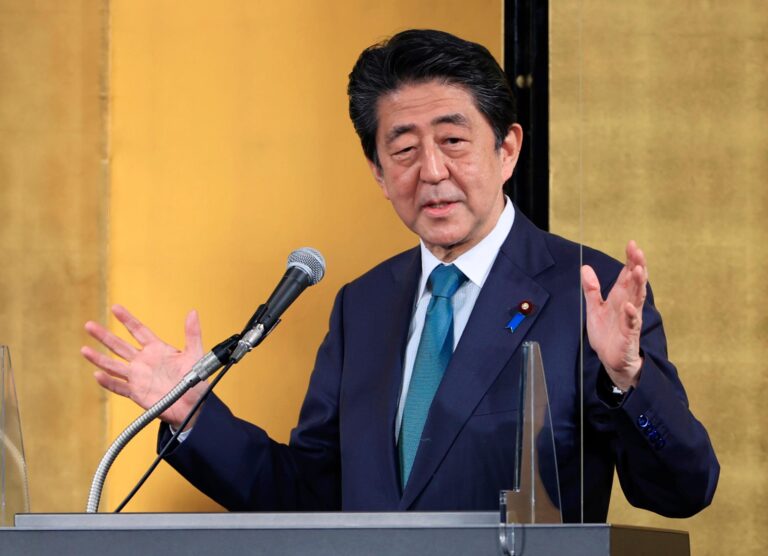
When former Japanese Prime Minister Shinzo Abe was shot dead during a campaign rally in the city of Nara on 8 July 2022, the world initially saw it as a shocking political assassination.
But as investigators dug deeper, the tragedy revealed something far more complex—a story of family ruin, religious influence and political connections that would eventually reshape Japan’s political landscape.
The gunman, 41-year-old former naval officer Tetsuya Yamagami, was arrested at the scene after firing two shots from a homemade gun. He made no attempt to escape.
Although Abe was rushed to hospital, he later died from his injuries.
Investigators soon discovered that Yamagami’s actions were driven less by politics than by years of personal pain.
His mother had donated around 100 million yen to the Unification Church, officially known as the Family Federation for World Peace and Unification.
The huge donations devastated the family’s finances, leaving them bankrupt. Yamagami’s father later took his own life, while the children grew up in poverty and social isolation.
Over the years, Yamagami came to blame the church for destroying his family.
He also believed Abe had helped legitimise the religious organisation through his long-standing links to it.
Those ties dated back decades to Abe’s grandfather, former Prime Minister Nobusuke Kishi, who supported the church’s expansion into Japan during the 1960s as part of efforts to build anti-communist alliances.
To Yamagami, Abe had become a symbol of the political protection that allowed the church to continue raising huge sums of money from followers without enough scrutiny.
He later admitted spending months building and testing the homemade firearm before carrying out the attack.
His trial at the Nara District Court concluded in January 2026, when he was sentenced to life imprisonment after pleading guilty.
While the court ruled that the murder had been carefully planned, the case became much more than the trial of one man.
It triggered widespread public debate over the influence of the Unification Church in Japan, its fundraising methods and its long-standing links with powerful politicians.
The fallout damaged political alliances, forced investigations into ties between lawmakers and the church, and ultimately paved the way for a landmark court ruling ordering the religious group’s dissolution—one of the most significant legal decisions involving a religious organisation in modern Japanese history.