The Senate Leader, Senator Opeyemi Bamidele, has given the four remaining state Houses of Assembly until Tuesday, November 17, to submit their reports on the proposed creation of state police.
Bamidele said 32 state assemblies had already approved the State Police (Constitution Alteration) Bill, 2026, adding that the National Assembly was ready to proceed with the next stage of the constitutional amendment process.
He made this known in a statement issued in Abuja after receiving The Sun Senator of the Year Award in recognition of his contributions to parliamentary leadership and lawmaking.
The award was presented by the founder of The Sun Publishing Limited and Chairman of the South-East Development Commission, Senator Orji Uzor Kalu.
Bamidele described the proposed establishment of state police as a major step towards addressing Nigeria’s security challenges, saying the idea had moved beyond years of political debate and was gradually becoming a reality.
According to him, the National Assembly has already secured the constitutional requirement for the amendment under Section 9(2) of the 1999 Constitution.
He said the four outstanding state assemblies were expected to submit their reports before lawmakers resumed on November 17, adding that their failure to do so would not stop the process.
“We are now under obligation to transmit the State Police (Constitution Alteration) Bill, 2026 to the President and Commander-in-Chief of the Armed Forces, His Excellency Bola Tinubu, for assent,” he said.
The proposed amendment seeks to establish separate Federal Police and State Police services, effectively changing Nigeria’s existing centralised policing structure.
The push for state police has gained momentum amid persistent security challenges, including banditry, kidnapping, terrorism and communal violence across the country.
However, the proposal has also generated concerns about possible political interference, abuse of power and the use of state security agencies to intimidate political opponents.
Addressing these concerns, Bamidele insisted that the proposed arrangement was not designed to create ethnic or state armies but to establish community-based policing structures operating within constitutional safeguards.
Bamidele highlights National Assembly’s achievements
Beyond the state police proposal, the Senate Leader used the occasion to defend the National Assembly’s legislative record, arguing that lawmakers should be judged by the impact of their laws on ordinary Nigerians rather than the number of bills they pass.
He called for proactive lawmaking and stronger cooperation among the three arms of government, saying legislation should be evidence-based, properly implemented and regularly reviewed.
Bamidele cited the Student Loan (Access to Higher Education) Act, 2024, noting that the Nigerian Education Loan Fund had disbursed more than ₦204bn to applicants across 89 colleges, 108 polytechnics and 126 universities.
He also highlighted the National Social Investment Programmes Act, 2023, which provides statutory backing and accountability for social protection programmes.
Other laws he mentioned included the Minimum Wage (Amendment) Act, 2024; Tax Reform Acts, 2025; Investments and Securities Act, 2025; Electoral Act, 2026; Nigerian Insurance Industry Reform Act, 2024; and the Regional Development Commissions Acts.
The Senate Leader also called for responsible use of social media, warning against misinformation, character assassination and the deliberate spread of false information about public institutions.
He urged media organisations, including the Newspaper Proprietors’ Association of Nigeria, Broadcasting Organisations of Nigeria, Nigerian Guild of Editors and Nigeria Union of Journalists, to take the challenge seriously.
However, he reaffirmed his support for press freedom, an open parliament and continued engagement with journalists, stressing the need to balance freedom of expression with responsible information sharing.
Bamidele dedicated the award to President Bola Tinubu, his fellow senators, his constituents and God, describing the recognition as a collective achievement.
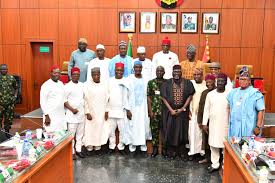
Several serving and former political office holders accompanied him to the ceremony, including former Ogun State governors Olusegun Osoba and Gbenga Daniel, as well as Senators Adetokunbo Abiru, Patrick Ndubueze and Francis Onyewuchi.