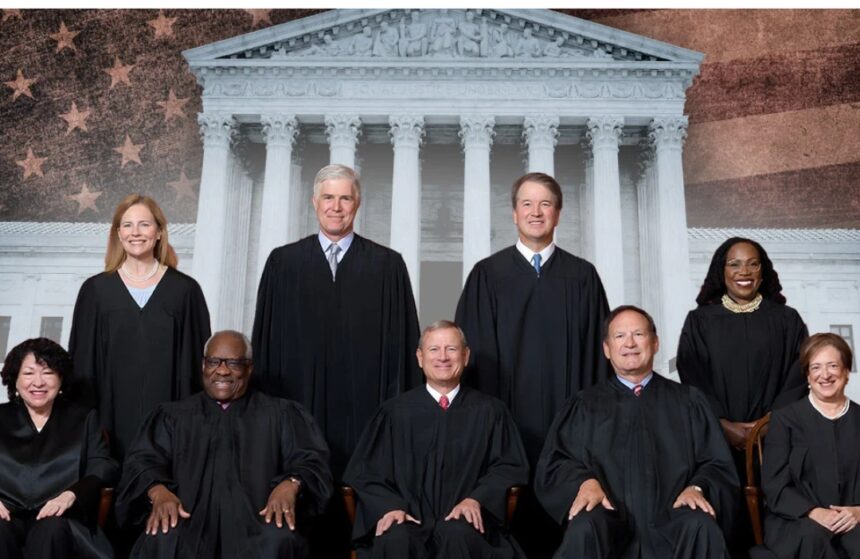
The United States Supreme Court has reaffirmed birthright citizenship, ruling that President Donald Trump’s executive order seeking to restrict the constitutional right violates the Fourteenth Amendment.
In its decision delivered on Tuesday, June 30, the court held in a 6–3 ruling that the executive order, which sought to deny automatic citizenship to certain children born in the United States, was unconstitutional.
The order directed federal agencies not to recognise the citizenship of children born in the United States if neither parent was a U.S. citizen or lawful permanent resident.
The policy was challenged by civil rights groups, which argued that it contravened the citizenship guarantee contained in the Fourteenth Amendment.
Birthright citizenship, also known as jus soli, grants automatic U.S. citizenship to anyone born on American soil. The right is protected under the Fourteenth Amendment, adopted in 1868 after the Civil War.
The amendment was enacted partly in response to the Dred Scott decision, which denied citizenship to African Americans. The principle was further strengthened by the Supreme Court’s 1898 ruling in United States v. Wong Kim Ark, which affirmed citizenship for children born in the United States to immigrant parents.
The United States is among at least 34 countries that recognise unrestricted birthright citizenship, with most countries in the Western Hemisphere maintaining similar policies.