
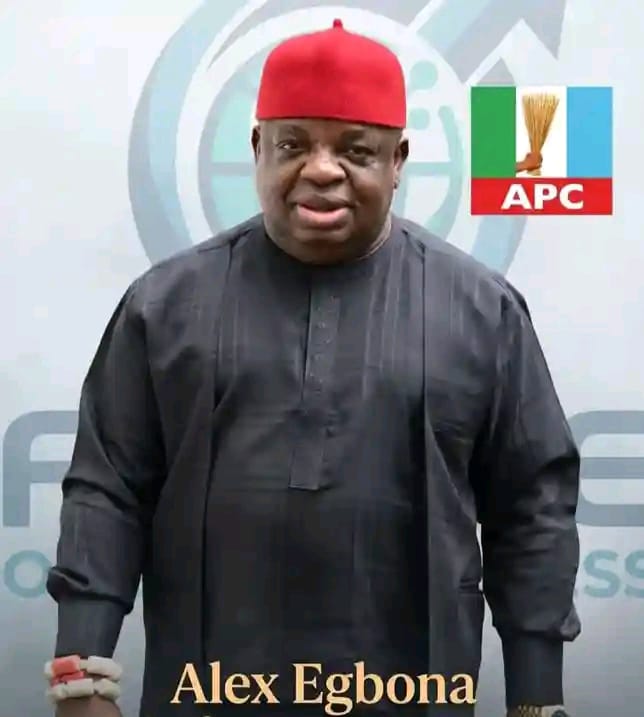
Development is not built on sentiments; it is sustained through experience, continuity, and influence. A careful look at the scorecard of Rt. Hon. Chief Dr. Alex Egbona reveals not just a representation, but a deliberate, structured spread of impactful projects across communities, touching lives, restoring dignity, and laying foundations for sustainable growth.
From solar-powered boreholes with reticulation in Mkpani, Nko, Agbara Ekureku II, and Ekureku-be, to borehole installations in Anong Ezeko, Ijiman Market, Ajere Ward, and Agbara Farm Road, access to clean water has been expanded significantly.
Communities once burdened by water scarcity now experience relief, an achievement that speaks directly to grassroots needs.
Beyond water, his interventions in infrastructure and energy are notable. The installation of over 3,000 solar street lights across all 23 wards has enhanced security and nighttime economic activities. The provision of transformers in Eminekpon and Agbara, as well as electricity installation in the Ibogholo community, further demonstrates a commitment to rural electrification and development.
Empowerment has not been left behind. Through training programs in modern fish farming for youths and women, alongside the distribution of sewing machines, grinding machines, motorcycles, and tricycles, livelihoods have been created and strengthened. These are not abstract policies, they are practical tools placed in the hands of the people.
Education and social welfare have also received attention, with furniture supplied to selected primary schools, and provision of food items, relief materials, generators, and refrigerators to support families and small-scale businesses. The construction of an ultra-modern civic centre in Akarefor further reflects a vision that goes beyond immediate needs to long-term community development.
This is not an isolated effort, it is a pattern of inclusive leadership. A leadership style that listens, collaborates, and delivers.
Yet, beyond projects, there is a deeper strategic reality that must not be ignored.
Legislative effectiveness is not only about good intentions; it is about ranking, influence, and institutional power. With a third term, Alex Egbona transitions from being just a performing legislator to becoming a ranking officer, one who can chair critical committees, influence national decisions, and attract even larger federal projects to the constituency. These are privileges that are not handed to newcomers; they are earned through continuity and experience.
Replacing such a legislator at this critical stage is not just a political decision, it is a developmental risk.
A newcomer, no matter how well-meaning, would return the constituency to the starting line, stripped of ranking benefits, reduced in influence, and forced to relearn the system. Even more complex is the political implication: to align with the existing three-term precedent set by Rt. Hon. Bassey Eko Ewa, a new entrant may seek to extend their stay, inadvertently prolonging the rotation imbalance and delaying equity.
In contrast, supporting Alex Egbona ensures stability, completion of ongoing projects, and access to greater opportunities that come with seniority.
This is not merely about continuity, it is about maximizing a strategic advantage already in motion.
His humane approach to leadership, working with the people, not above them, has earned him trust and loyalty. He has never operated in isolation; his achievements reflect collective engagement and shared vision.
With more projects already in the pipeline, the path forward is clear.
To sustain progress, deepen development, and elevate the constituency to greater national relevance, the choice is not complicated.
It is experience over experimentation.
It is continuity over uncertainty.
It is influenced over limitation.
It is Alex Egbona for a third term.