As the build-up to the 2027 general elections gathers momentum, the Arochukwu/Ohafia Federal Constituency is witnessing a shift from routine political calculations to a more profound and defining conversation—one centered on equity, performance, and the urgent need for a broadened representation.
For over a decade, the constituency has maintained uninterrupted representation in Nigeria’s House of Representatives through successive lawmakers—Arunsi Arua (2011–2015), Uko Ndukwe Nkole (2015–2023), and currently Ibe Okwara Osonwa (2023–present). While these tenures reflect the outcomes of democratic processes, they have also produced a pattern that is now at the center of political debate within the constituency.
A critical examination of this trajectory shows a sustained concentration of representation within the Arochukwu/Abam political axis. Over successive electoral cycles, leadership has emerged from this corridor, creating what stakeholders increasingly describe as a structural imbalance in a constituency designed to reflect two major blocs—Arochukwu and Ohafia Local Government Areas.
This pattern has not gone unnoticed.
Growing Concerns Over Balance and Inclusion
Within Ohafia LGA, particularly in Abiriba, concerns over underrepresentation have evolved into a coordinated political position. Community leaders, stakeholders, and a growing segment of the electorate argue that while Arochukwu has consistently produced representatives, Ohafia—despite its political weight—has remained on the margins of federal legislative leadership.
Abiriba, known for its strong economic base, educational advancement, and organized civic structure, stands at the center of this agitation. Its absence from the Green Chamber in recent democratic cycles is now widely viewed not as coincidence, but as a gap requiring deliberate correction.
In Nigeria’s political culture, zoning and rotation are often employed as mechanisms to preserve unity and ensure equitable distribution of power. Within this framework, the call for a shift toward Ohafia—specifically Abiriba—is gaining both legitimacy and urgency.
Performance Debate Shapes the Narrative
Beyond the issue of zoning lies another critical dimension: performance.
Across communities in both LGAs, constituents are increasingly evaluating the tangible impact of representation. Questions are being raised about the visibility of federal projects, the scale of infrastructural development, and the extent to which legislative advocacy has translated into real benefits for the people.
While past and present representatives have contributed in various capacities, a prevailing sentiment suggests that the constituency has yet to fully maximize its presence at the federal level. This perception has intensified calls for a more result-driven and visibly impactful approach to representation.
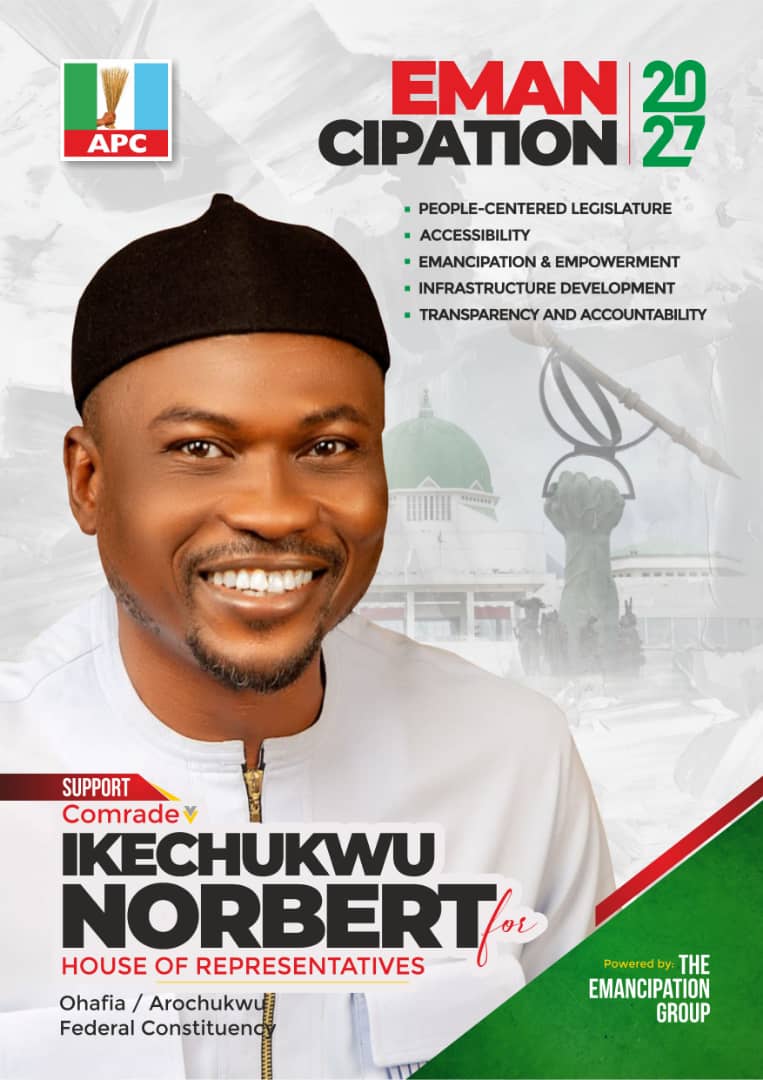
Emergence of Rt. Comrade Ikechukwu Norbert
It is within this evolving political climate that Rt. Comrade Ikechukwu Norbert has emerged as a prominent figure in the unfolding 2027 equation.
A member of the All Progressives Congress, Norbert’s profile is defined by grassroots engagement, organizational experience, and a growing reputation for political coordination. His rise reflects not only personal ambition but also a convergence of constituency expectations around inclusion and capacity.
Significantly, his roots in Abiriba position him within the broader zoning argument, reinforcing calls for a redistribution of political opportunity. To many observers, his candidacy represents both a symbolic and strategic departure from established patterns.
A Defining Moment for the Electorate
As political activities gradually intensify, the choice before voters in Arochukwu/Ohafia is becoming increasingly clear. It is a choice between continuity and recalibration—between maintaining a familiar political trajectory and embracing a shift aimed at broadening representation.
Analysts note that while zoning presents a compelling argument, electoral success will ultimately depend on a combination of factors, including political structure, voter mobilization, and the ability to articulate a clear development agenda.
For Norbert, this means expanding his appeal across both LGAs and presenting a vision that resonates beyond identity politics. For the electorate, it presents an opportunity to redefine the direction of representation in the constituency.
Conclusion: Toward a New Political Balance
The unfolding discourse within the Arochukwu/Ohafia Federal Constituency underscores a fundamental reality: representation is no longer judged solely by electoral victory, but by inclusivity, visibility, and measurable impact.
The increasing focus on Abiriba reflects a broader demand for balance—one that aligns with both the spirit of zoning and the expectations of democratic fairness.
As 2027 approaches, the constituency stands at a critical juncture. The decisions made will not only determine who represents the people in the Green Chamber but will also shape the future of political inclusion and development within the constituency.
In this context, Rt. Comrade Ikechukwu Norbert has emerged as a central figure in the conversation—symbolizing both the demand for change and the possibility of a new chapter in the political history of Arochukwu/Ohafia.
Whether that possibility translates into electoral reality remains to be seen. However, one point is increasingly clear:
The call for a more balanced, inclusive, and impactful representation can no longer be ignored.