
The recent publications credited to APC Legacy Members, Central Senatorial District and Cross River Central Progressive Voices, titled “APC State Chairmanship Demand by Cross River North: Putting the Record Straight” and “Strategic Realignment: Why the State Chairmanship Must Return to Central,” have attempted to project a narrative of injustice and marginalisation against the Central Senatorial District. While political advocacy is a legitimate democratic exercise, it becomes problematic when it is built on selective history, emotional exaggeration, and the deliberate omission of critical facts.
This rejoinder is therefore necessary not to inflame tensions within the All Progressives Congress (APC) in Cross River State, but to restore factual balance, interrogate the flawed assumptions underpinning the Central agitation, and clearly demonstrate why the Northern Senatorial District is justifiably positioned to retain the APC State Chairmanship for a second term, in line with historical precedent, zoning ethics, and political equity.
From inception, the APC in Cross River State has thrived on negotiated balance rather than rigid arithmetic formulas. Power-sharing in the state has never been limited to a narrow “tripod” of “Governor, Deputy Governor, and Party Chairman”, as the Central argument repeatedly suggests. Rather, it has always encompassed a broader governance ecosystem that includes the Speakership of the State House of Assembly, ministerial appointments, federal political offices, and other strategic leadership positions. Any discussion of equity that deliberately ignores these critical power centres is, by definition, incomplete and misleading.
The claim that the Central Senatorial District is perpetually marginalised collapses immediately on its face when the issue of the Speakership of the Cross River State House of Assembly (CRSHA) and Secretary to the State Government are examined.
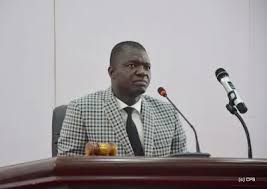
The Speakership of the legislative arm of Government is not a mere ceremonial role but powerful leadership role of great influence. The Speakers control legislative agenda, oversight, and budgetary processes. The Central Senatorial District has overwhelmingly dominated these positions over the years as it has produced Rt. Hon. Bassey Eko Ewa, Rt. Hon. John Gaul Lebo, Senator Eteng Jones William, and currently Rt. Hon. Elvert Ayambem; four Speakers across different political eras.
At the executive level, the Central Senatorial District consistently kept the Secretary to the State Government positions across two political eras from Barr. Tina Banku Agbor in the last administration to Prof. Anthony Owan Enoh in the current administration. The Secretary to the State Government is the Chief Adviser to Government and Head of all government political appointees. These levels of legislative and executive dominance in key political positions fundamentally contradicts any claim of exclusion or systematic oppression.
Beyond the legislature, the district has also enjoyed substantial influence at the federal level as high-profile ministerial and national appointments, notably those held by H.E. Senator Liyel Imoke, Dr. Usani Uguru Usani, Hon. Dr. Betta Edu, Senator Victor Ndoma Egba, Ambassador Sunny Abang, and Senator John Owan Enoh, have placed the Central firmly within the national power architecture with positions that carry immense political capital, access, and influence, often exceeding what a state party chairmanship alone can provide. Equity cannot be assessed honestly by isolating one party office while ignoring sustained dominance in other strategic political positions.
When the matter of the State Chairmanship of the ruling party itself is examined objectively, the historical record again undermines the Central agitation because since 1999, the Central and Southern Senatorial Districts have occupied the chairmanship position under the following: Rev. Ikobi, Amb. Sony Abang, Hon Ekpo Okon, John Achort Okon, Eno Idim spanning roughly over twelve years. The Northern Senatorial District has occupied the position only once, for about four years, under Barrister Alphonsus Ogar Eba. On the scale of fairness, therefore, the North is not over-represented; she is, in fact, the least accommodated.
The argument that the North must relinquish the chairmanship now, barely after one full term, while other zones enjoyed two or three terms, is neither equitable nor consistent with established political practice in the state. Equity demands equity and fairness not premature displacement. Any attempt to deny the North a second term would amount to institutionalising imbalance rather than correcting it.
Equally flawed is the Central narrative built around the so-called “South–North–North” configuration which assumes equivalence between the Deputy Governorship and the Party Chairmanship while conveniently ignoring Central’s firm grip on the Speakership and her historical ministerial advantage. Zoning in Cross River State has never operated on simplistic numerical symmetry, but has always been contextual, negotiated, and sensitive to the totality of power distribution.
The frequent reference to the Ben Ayade administration between 2015 and 2023 also suffers from selective interpretation because Barr. Alphonsus Ogar Eba assumed office as APC Chairman in October 2021, with barely one year and seven months left in that administration. To present this limited tenure as evidence of prolonged Northern dominance is intellectually disingenuous. More importantly, zoning is not reset arbitrarily with every political grievance; it follows continuity across administrations and under the current administration of Governor Prince Bassey Edet Otu, the chairmanship entered a fresh political cycle, and fairness dictates that the North be allowed to complete a second term within this cycle.
The agitation to forcefully rotate the chairmanship away from the North at this stage carries serious implications for party unity as such a move would be perceived by Northern APC members as political strong-arming, breeding resentment, factionalism, and internal disaffection and a party preparing for future electoral battles cannot afford self-inflicted wounds arising from avoidable injustice.
His Excellency, Governor Prince Bassey Edet Otu, as the leader of the party in the state and a known advocate of inclusive governance, occupies a pivotal position in this discourse. His administration has been marked by an emphasis on fairness, balance, and reconciliation. Yielding to sectional pressure that undermines established zoning norms would contradict these values and risk destabilising the party’s internal harmony.
In the final analysis, justice is not about volume of protest but consistency of principle. The South has enjoyed the APC chairmanship three times; the Central has enjoyed it twice and continues to dominate the Speakership and Secretary to Government positions while benefiting from substantial federal leverage; the North has had it only once. Asking for a second term is not an act of greed, but a legitimate demand for parity within the party’s historical framework.
Therefore, the call by the Northern Senatorial District to retain the APC State Chairmanship is grounded in history, fairness, and political logic. Any contrary narrative, no matter how passionately presented, remains rooted in selective memory and opportunistic argumentation. As the party approaches its congresses, all genuine stakeholders must rise above sectional sentiment and embrace a balanced approach that preserves unity, stability, and the long-term strength of the APC in Cross River State.
Concerned APC Members,
Cross River State From the Northern Senatorial District .